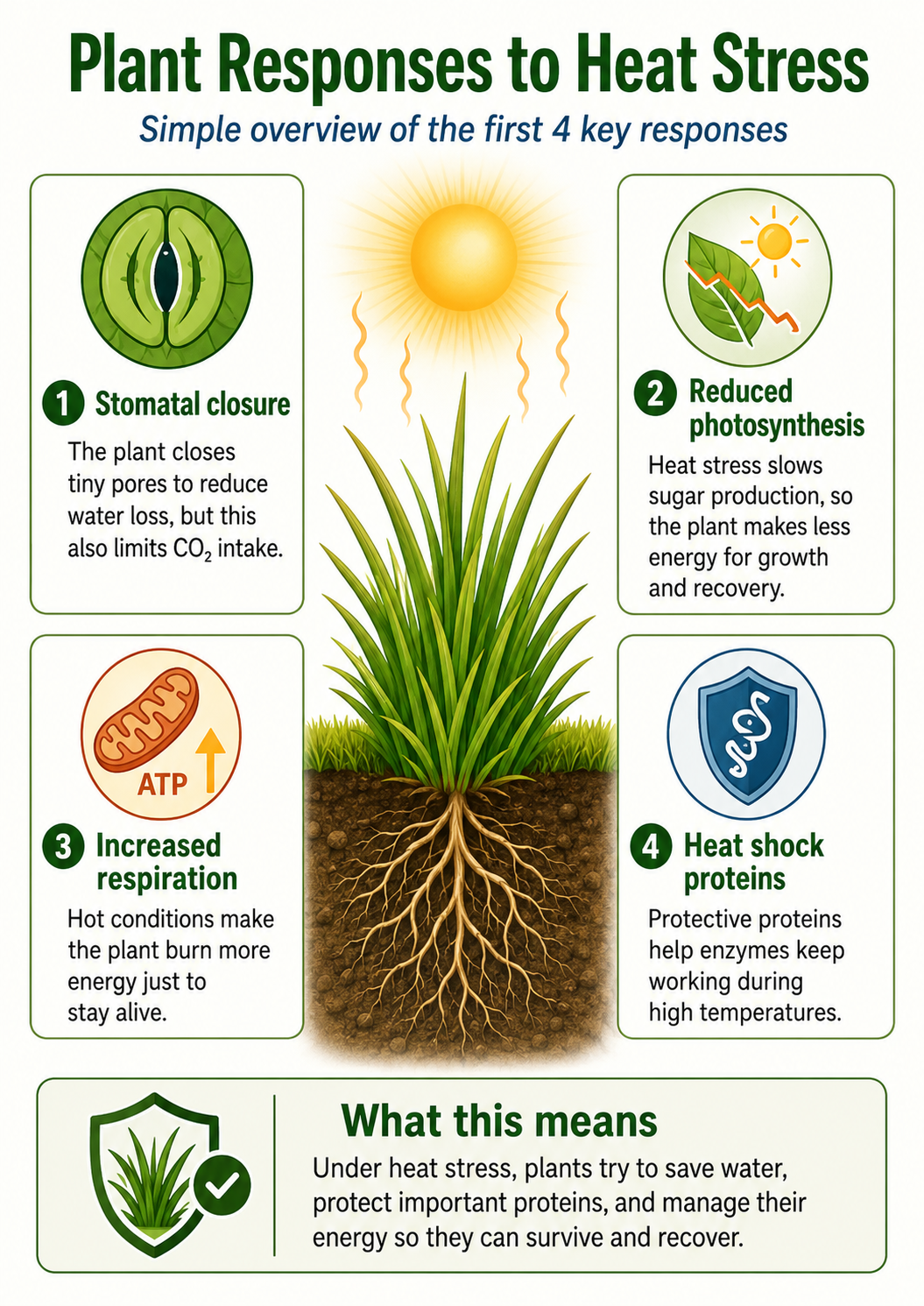
At face value, Heat and Salinity go hand and hand. Often times plant response to these conditions are the same. Responses such as leaf pore closure, reduced photosynthesis and increased respiration. These responses lead to lower health quality and lead to improper usage of carbohydrates during the most critical parts of the season. High Sodium conditions lowers the soil water potential which makes it more difficult for plants to uptake water1.
An abundance of Sodium ions decrease the availability of other ions such as Potassium, Calcium and Magnesium. An Increase in potassium efflux (discharge at the cellular level) can be detrimental to nutrient ratios. Potassium is an important activator if a large number of enzymes which means a higher concentration of Sodium can hamper protein functions and growth activity2.
Bermudagrass uses certain small compounds called metabolites. Metabolites are used to make energy, build proteins and keep growing. 37 of those compounds are used for Carbon and amino acid functions, and during drought stress, 18 of those 37 were affected3.
Reduced water quality, water quantity, prolonged with water that already contains salt ions is a growing concern which may result soil salinization. All of these paired with high problematic fertilizer can lead to poor results1.
1 Atta et al. (2023)
2 Page and Cera (2006)
3 Ye et al (2016)